Smoky Hill River
Butcher's CrossingThe Smoky Hill River is the expedition’s first substantial guide across the plains and a practical lifeline for its people and animals. Its banks mark the change from a traveled route to open country: the party can follow the river and replenish its water, but eventually Miller leads them away from it into a landscape without paths or landmarks. The river’s importance is therefore measured not only by the water it provides, but by the danger that begins when the expedition leaves its reach.
Route and Threshold
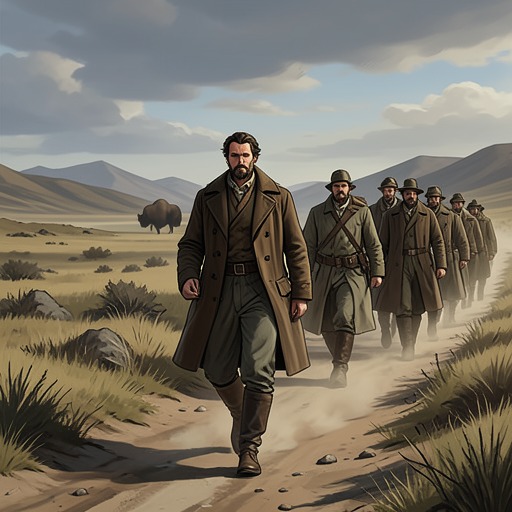
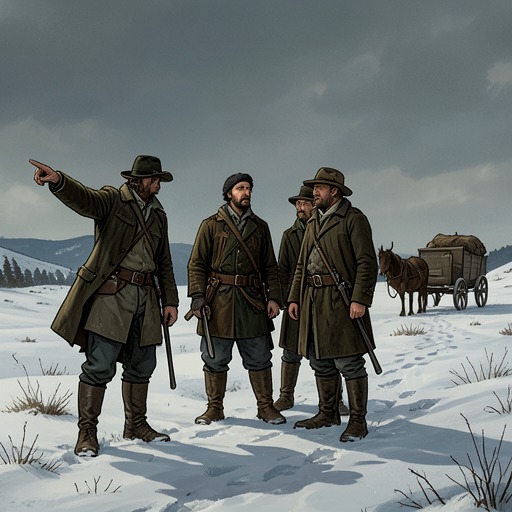
The party approaches the river before dawn, crossing where it runs shallow over flat rocks in soft mud. In the half-moon light, its uneven reflections make the water seem broader and deeper than it is; it barely covers the horses’ hooves and laps against the wagon wheels. After crossing, Miller points west, away from the road, and directs the men toward the Smoky Hill. They travel over dense grass without a visible guide, their wheel tracks fading into the horizon behind them. The river is the destination that gives this first leg a direction, even as the route away from it begins to erase familiar reference points.
At midday, Charley Hoge spots trees ahead, and the party finds the river after covering fewer than eight miles. Miller explains that the Smoky Hill Trail runs close to the river toward Colorado. Following it would make for an easy journey, expected to take less than a week; beyond Colorado, however, the expedition will have no trail and will cross the country directly. For Will Andrews, the distinction opens onto the wilderness he has come to seek. The river route is a passage toward that unknown, not a substitute for it.
A Place to Rest and Replenish
On the sixth day, the men reach the end of the Smoky Hill Trail. From the rising ground, they can see the water moving slowly through trees and brush, reflecting the sun as a silvery surface. The scene offers a striking contrast to the exposed plains: the riverbank is green with moisture, and the oxen turn toward the water as soon as they stop. Miller lays out the choice clearly. The trail follows the river, where they can have water in abundance, but staying with it will cost them at least a week before they reach their destination.
Before turning inland, Miller orders the animals rested and watered and has the party carry as much water as it can. The men improvise a large container from a square provisions tarp, supporting it with green branches and leather straps. About five feet wide and four feet high, it is filled to three-quarters using cooking pots, kettles, and a small wooden barrel. The work takes nearly an hour. They spend the afternoon in the river’s shade while Charley Hoge cooks beans and bacon and heats coffee. The sound of the water accompanies their rest, flowing away through the grasslands toward Butcher’s Crossing and eastward beyond it. For a little while the river makes the dry crossing ahead seem manageable.
Leaving the River
When the afternoon sun reaches them, Miller calls the party onward. The oxen are paired and harnessed, and the men head out across a plain with no trees or trail to guide them. The green line of the river soon disappears. Will Andrews has to keep his eyes on Miller’s back to follow the direction of travel; the feature that had made the route legible is no longer visible. That evening the expedition camps without access to water. Under a lantern, Miller meters out what remains from the tarp container, stopping each animal after its share. Once the oxen and horses have drunk, only a quarter of the water remains.
The river’s absence becomes a physical crisis. The oxen’s restless movements disturb Will Andrews’ sleep, and Miller wakes him before dawn to start the animals while they are still able to move without water. As the shortage deepens, Miller gathers the remaining water from the men’s bottles into Charley Hoge’s wooden barrel. The careful pouring leaves about four inches in the barrel; Fred Schneider, seeing the small reserve, throws his empty bottle against the wagon in anger. These episodes sharpen the contrast between the riverbank’s easy access to water and the exposed country beyond it. The shortage is not abstract: it governs when the party travels, how it handles its animals, and how little margin remains for error.
Landscape and Narrative Significance
For Will Andrews, the Smoky Hill is both a visible route through the plains and part of a much larger horizon. From his hotel window in Butcher’s Crossing, he looks west toward the river and beyond, where the distant landscape can blur into the sky as the day advances. The view recalls the immense horizon he once watched as a child in Massachusetts. That remembered scale connects his attraction to the West with his unease before a landscape that seems to have no firm boundaries.
The river’s role in the journey gives that unease a practical counterpart. At its bank, the party can rest, feed itself, water its animals, and make a large reserve; away from it, even the direction of travel depends on following Miller across featureless ground. The river is not the wilderness itself, but the expedition’s temporary measure of safety against it. Its disappearance from sight marks the point at which the men must rely on stored water, on one another’s decisions, and on a route no visible trail can confirm.